32 private links
millenials have all the reason in the world to burn it all down, experiencing a second once-in-a-lifetime downturn in like a dozen years "near guaranteeing that they will be the first generation in modern American history to end up poorer than their parents" when normal things like housing and job safety are no longer even on offer even in boom times.
unlike the great financial crisis, this time people are willing to genuinely question the basic makeup of society. makes sense when it's an outside-in crisis, impacting society everywhere resulting in economic impact. last time, being an inside-out crisis stemming from financial markets, few people called for any kind of major overhaul of the system, and think they were mostly written off as kooks. things were patched over with traditional methods, liquidity, QE, regulation.
now people are going much further, thanks to bernie/AOC/yang creating real discussion about fundamental change. recent events making that argument much more palatable. many trump supporters and nonsupporters favour radical change from where we are now. visible direct conflict between major powers (russia, US, UK/EU, China) beg the question of "what's the right system?" and the many flaws in each of the existing ones. change is on everyone's minds

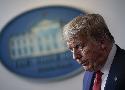
China and the US have each made big mistakes. But the US failure to create widely shared prosperity at home, and its bellicosity abroad, are proving crippling. The dismal presidency of a malevolent incompetent is one result.
Worst of all, argues veteran anti-corruption campaigner, Frank Vogl, is a $500bn fund for big corporations likely to be under Mr Trump’s unsupervised control, which is contrary to the will of Congress.
A government at war with science and its own machinery is now very visible to all.
For those of us who believe in liberal democracy, these US failures hurt: they give credence to the idea that autocracy works better.
bold thinking from a guy who knows a thing or two. change to the establishment being proposed by the establishment.
"Current supervisory tools were designed to restrain banks from overextending themselves. Right now, we have the opposite problem: banks are not filling the void left by the retreat of market-based finance.
Banks should be part of the solution, not part of the problem. Now is the time to draw on the accumulated balance sheet buffers that were built while the sun was shining. To boost lending capacity further, we need a global freeze on bank dividends and share buybacks.
However, this first step may not be enough, as lenders pull in their horns and retreat from risk-taking. That’s why there needs to be a second step of enlisting the banks to lend, using central bank funding for lending schemes. Risk sharing by governments through guarantee schemes is needed to ensure that economic risks are not pushed to banks or the central bank.
A crisis in market finance needs market-based solutions. For central bank liquidity to reach the far corners of the financial system, it must directly target individuals and businesses that need it most. Otherwise, central bank actions may be just pushing on a string."
nice simulation to get the point across
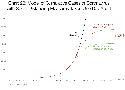
most important page on ncov
Politicians and Business Leaders: What Should You Do and When?
The news from Italy suggests that 20 percent of health care workers have been infected, and several have died.
Narrow vision, data ignorance, image-conscious decision-making and truncated memory are the very elements of contagion.
found evidence in support of masks but only for infected cases.
"All studies selected hospital cases, except one in which the cases were people with probable SARS reported to the Department of Health in the territory of Hong Kong up to 16 May 2003."
epidemiologist: "although buried a bit, a mask does NOT protect you from catching it, it keeps an infected person from transmitting it. All the other is good to go."
the buried bit is this part in the article: "Physical means might prevent the spread of virus by aerosols or large droplets from infected to susceptible people (such as by using masks and distancing measures)"
so there is no evidence on the efficacy of healthy people wearing masks. of any sort, it would seem. at least in this review.
a medical mask is not required, as no evidence is available on its usefulness to protect non-sick persons. However,masks might be wornin some countries according to local culturalhabits.
Wearing medical masks when not indicated may cause unnecessary cost, procurement burden (medical staff can't get it, I guess) and create a false sense of security that canlead to neglectingother essential measures such as hand hygiene practices.Furthermore, using a mask incorrectly may hamper its effectiveness to reduce the risk of transmission.
As of 20 February 2020 and 12 based on 55924 laboratory confirmed cases, typical signs and symptoms include: fever (87.9%), dry cough (67.7%), fatigue (38.1%), sputum production (33.4%), shortness of breath (18.6%), sore throat (13.9%), headache (13.6%), myalgia or arthralgia (14.8%), chills (11.4%), nausea or vomiting (5.0%), nasal congestion (4.8%), diarrhea (3.7%), and hemoptysis (0.9%),
and conjunctival congestion (0.8%).
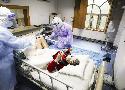
most of the measures used in China to stop the virus were traditional public health moves that are broadly accepted — and the draconian measures were rarer.
I think the key learning from China is speed — it’s all about the speed. The faster you can find the cases, isolate the cases, and track their close contacts, the more successful you’re going to be.
Since coming back from China, everybody I talk to begins with, “We can’t lock down a city of 15 million people like China.” I say, “Why would you ever want to?” And I ask, “Does your population know x, y, z [about the virus]?” I learn they haven’t started with the basics.
So, No. 1, if you want to get speed of response, your population has to know this disease. You find any population in the West and ask them what are the two presenting signs you have to be alert to. ... the two initial symptoms most common [are] fever and dry cough... [But many still think] it’s a runny nose and cold. Your population is your surveillance system. Everybody has got a smartphone, everybody can get a thermometer. That is your surveillance system. Don’t rely on this hitting your health system, because then it’s going to infect it.
the key is public information and having an informed population, finding those cases, rapidly isolating them. The faster you isolate them is what breaks the chains. Making sure close contacts are quarantined and monitored until you know if they’re infected. Somewhere between 5 and 15 percent of those contacts are infected. And again, it’s the close contacts, not everyone.
China took a whole bunch of steps when they realized they had to repurpose big chunks of their hospital systems to [respond to the outbreak]. The first thing is, they said testing is free, treatment is free. Right now, there are huge barriers [to testing and treatment] in the West. You can get tested, but then you might be negative and have to foot the bill. In China, they realized those were barriers to people seeking care, so, as a state, they took over the payments for people whose insurance plans didn’t cover them. They tried to mitigate those barriers.
The other thing they did: Normally a prescription in China can’t last for more than a month. But they increased it to three months to make sure people didn’t run out [when they had to close a lot of their hospitals]. Another thing: Prescriptions could be done online and through WeChat [instead of requiring a doctor appointment]. And they set up a delivery system for medications for affected populations.
People keep saying [the cases are the] tip of the iceberg. But we couldn’t find that. We found there’s a lot of people who are cases, a lot of close contacts — but not a lot of asymptomatic circulation of this virus in the bigger population. And that’s different from flu. In flu, you’ll find this virus right through the child population, right through blood samples of 20 to 40 percent of the population.
Originally, I was a big believer in the idea that we should swab millions and see what’s going on [how many have the virus]. But the data from China made me rethink that. What could be done instead is that every hospital should test people with atypical pneumonia for Covid. People with flu-like symptoms — test for Covid.
Panic and hysteria are not appropriate. This is a disease that is in the cases and their close contacts. It’s not a hidden enemy lurking behind bushes. Get organized, get educated, and get working.

"It's not a cold. It's not a runny nose. It's not a sore throat. Those are relatively rare symptoms in COVID," he said.
News, analysis and comment from the Financial Times, the worldʼs leading global business publication
The fact that China’s authoritarian system is particularly poor at dealing with public health emergencies that require timely, transparent and accurate information makes this far more significant than any other challenge Mr Xi has faced so far.
The death of the 34-year-old doctor marked a pivotal moment in the coronavirus outbreak, as its rapid spread presents President Xi Jinping with his gravest political and economic challenge since assuming power in 2012.
Authorities are struggling to contain public anger over the official mishandling of the outbreak that has killed more than 600 people. The crisis also threatens to undermine the central government’s narrative that it is in control of the rapidly evolving situation.
References to [Li's] passing had been viewed 270m times on Weibo, China’s Twitter-like platform, early on Friday after being announced by a Wuhan hospital.
Another Weibo user called Ren Xuanpan wrote “we all know it’s not the bat that kills people” — a reference to suggestions that the animal was the origin of the virus.
“The government has made Wuhan a living hell,” said another post.
Many users have posted lyrics to “Do you hear the people sing”, a song from the musical Les Misérables, to commemorate Li.
The Chinese government operates one of the world’s most comprehensive online censorship programmes and is able to cleanse social media of criticism of the government.
The hashtag “I want freedom of speech” was censored during the night and is now unsearchable on both Weibo and Douban, another social networking platform.
When dissident and Nobel laureate Liu Xiaobo died in custody in 2017, internet users posted candle emojis, an expression that was eventually blocked by the government.
During the last week of January, social media experts noted that a much higher degree of anti-government commentary — mainly anger at local government mismanagement of the crisis — had been permitted. But since the start of February, censors have stepped up efforts to remove negative comments.
many residents say it is nearly impossible to get the health care they need to treat — or even diagnose — the coronavirus
Layers of bureaucracy stand between residents and help. And the long lines outside hospitals for testing and treatment suggest that the outbreak is spreading far beyond the official count of cases.
“The situation that we’ve seen is much worse than what has been officially reported,” Long Jian, 32, said outside a hospital where his elderly father was being treated. Mr. Long said his father had to go to six hospitals and wait seven days before he could even be tested for the coronavirus.
“Those who can get diagnosed and treated are the lucky ones,” Mr. Long said. “In our neighborhood, many who weren’t able to get diagnosed ended up dying at home.”
“I’m very dissatisfied with the government,” Ms. Hu said. “It’s like only when the patients are close to death can they be admitted to a hospital.”
Tong Yixuan, 31, said Sunday that he panicked last week when he learned that in just a few days, his father’s cold had escalated into a full-blown illness that doctors said was almost certainly the coronavirus.
But neither his father, who had a 104-degree fever and was slipping in and out of consciousness, nor his mother, who was starting to show similar symptoms, could get tested. Hospitals said that there was no space, and that their symptoms were not severe enough, Mr. Tong said. His parents were sent home to quarantine themselves.
“This was an issue of inaction,” said Yanzhong Huang, a senior fellow for global health at the Council on Foreign Relations who studies China. “There was no action in Wuhan from the local health department to alert people to the threat.”
The first case, the details of which are limited and the specific date unknown, was in early December. By the time the authorities galvanized into action on Jan. 20, the disease had grown into a formidable threat.
It is now a global health emergency. It has triggered travel restrictions around the world, shaken financial markets and created perhaps the greatest challenge yet for China’s leader, Xi Jinping. The crisis could upend Mr. Xi’s agenda for months or longer, even undermining his vision of a political system that offers security and growth in return for submission to iron-fisted authoritarianism."
...
Beijing was involved from the get-go
"The day before, on Dec. 31, national authorities had alerted the World Health Organization’s office in Beijing of an outbreak."
...
“Stressing politics is always No. 1,” the governor of Hubei, Wang Xiaodong, told officials on Jan. 17, citing Mr. Xi’s precepts of top-down obedience. “Political issues are at any time the most fundamental major issues.”
Shortly after, Wuhan went ahead with a massive annual potluck banquet for 40,000 families from a city precinct, which critics later cited as evidence that local leaders took the virus far too lightly.
...
Wuhan’s mayor, Zhou Xianwang, later took responsibility for the delay in reporting the scale of the epidemic, but said he was hampered by the national law on infectious diseases. That law allows provincial governments to declare an epidemic only after receiving central government approval. “After I receive information, I can only release it when I’m authorized,” he said.