32 private links
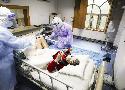
most of the measures used in China to stop the virus were traditional public health moves that are broadly accepted — and the draconian measures were rarer.
I think the key learning from China is speed — it’s all about the speed. The faster you can find the cases, isolate the cases, and track their close contacts, the more successful you’re going to be.
Since coming back from China, everybody I talk to begins with, “We can’t lock down a city of 15 million people like China.” I say, “Why would you ever want to?” And I ask, “Does your population know x, y, z [about the virus]?” I learn they haven’t started with the basics.
So, No. 1, if you want to get speed of response, your population has to know this disease. You find any population in the West and ask them what are the two presenting signs you have to be alert to. ... the two initial symptoms most common [are] fever and dry cough... [But many still think] it’s a runny nose and cold. Your population is your surveillance system. Everybody has got a smartphone, everybody can get a thermometer. That is your surveillance system. Don’t rely on this hitting your health system, because then it’s going to infect it.
the key is public information and having an informed population, finding those cases, rapidly isolating them. The faster you isolate them is what breaks the chains. Making sure close contacts are quarantined and monitored until you know if they’re infected. Somewhere between 5 and 15 percent of those contacts are infected. And again, it’s the close contacts, not everyone.
China took a whole bunch of steps when they realized they had to repurpose big chunks of their hospital systems to [respond to the outbreak]. The first thing is, they said testing is free, treatment is free. Right now, there are huge barriers [to testing and treatment] in the West. You can get tested, but then you might be negative and have to foot the bill. In China, they realized those were barriers to people seeking care, so, as a state, they took over the payments for people whose insurance plans didn’t cover them. They tried to mitigate those barriers.
The other thing they did: Normally a prescription in China can’t last for more than a month. But they increased it to three months to make sure people didn’t run out [when they had to close a lot of their hospitals]. Another thing: Prescriptions could be done online and through WeChat [instead of requiring a doctor appointment]. And they set up a delivery system for medications for affected populations.
People keep saying [the cases are the] tip of the iceberg. But we couldn’t find that. We found there’s a lot of people who are cases, a lot of close contacts — but not a lot of asymptomatic circulation of this virus in the bigger population. And that’s different from flu. In flu, you’ll find this virus right through the child population, right through blood samples of 20 to 40 percent of the population.
Originally, I was a big believer in the idea that we should swab millions and see what’s going on [how many have the virus]. But the data from China made me rethink that. What could be done instead is that every hospital should test people with atypical pneumonia for Covid. People with flu-like symptoms — test for Covid.
Panic and hysteria are not appropriate. This is a disease that is in the cases and their close contacts. It’s not a hidden enemy lurking behind bushes. Get organized, get educated, and get working.
