32 private links
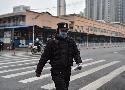
Even after cases were being reported in Thailand and South Korea, Wuhan officials organized holiday shopping fairs like the one Pan visited. They held a downtown community potluck attended by as many as 40,000 families. They distributed hundreds of thousands of tickets to local attractions.
“Everything was down to not collecting cases, not letting the public know,” said Dali Yang, a prominent scholar of China’s governance system at the University of Chicago. “They were still pushing ahead, wanting to keep up appearances.”
Without clear government warnings, people kept traveling — both within and beyond China.
Yang Jun, a prominent sales executive in the photovoltaic equipment industry, traveled to a meeting in Wuhan on Jan. 6 and returned home on the train to Beijing via Shanghai a week later.
A day before he checked himself into a hospital, he attended a school event with his daughter and sat in a lecture hall with hundreds of other parents, according to a statement released later by the Beijing school that asked all parents to quarantine themselves.
Yang died this week
...
In a Jan. 27 state media interview, Wuhan Mayor Zhou Xianwang said he was not authorized by his superiors to disclose the epidemic earlier
...
The Supreme People’s Court also issued an unusual statement admonishing the Wuhan police for detaining eight scientists.
“If society had at the time believed those ‘rumors,’ and wore masks, used disinfectant and avoided going to the wildlife market as if there were a SARS outbreak, perhaps it would’ve meant we could better control the coronavirus today,” the high court said. “Rumors end when there is openness.”

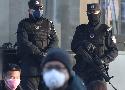
"Chinese authorities are cracking down on negative media coverage and social media commentary about the coronavirus outbreak, threatening anyone who breaches their rules with up to seven years in jail." including in private chats, with rumour defined as broadly as describing daily life
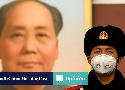
To maintain its authority, the Communist Party of China must keep the public convinced that everything is going according to plan. That means carrying out systemic cover-ups of scandals and deficiencies that may reflect poorly upon the party’s leadership, instead of doing what is necessary to respond.
But perhaps the most tragic part of this story is that there is little reason to hope that next time will be different. The survival of the one-party state depends on secrecy, media suppression and constraints on civil liberties. So, even as Chinese President Xi Jinping demands that the government increase its capacity
to handle “major risks”, China will continue to undermine its own – and the world’s – safety, to bolster the Communist Party’s authority.
When China’s leaders finally declare victory against the current outbreak, they will undoubtedly credit the party’s leadership. But the truth is just the opposite: the party is again responsible for this calamity.