32 private links

“It feels like an invasion,” said a woman who asked not to be named out of fear of retaliation. She was protesting at the Whipple federal detention facility at 7 a.m. on a frigid, 12-degree morning. The woman, a restaurant owner, said she closed her business temporarily because she was trying to protect her employees who were immigrants. “It feels very much like a Nazi Germany situation to me. It needs to stop, and people need to know what’s going on.”

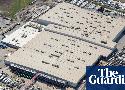
Win for Memphis activists who say ‘Colossus’ facilities add extra pollution to already overburdened communities

“It is vital for the Golden Dome that we are building,” he said, referring to a proposed missile defence system.
Greenland and Denmark have repeatedly pointed out that a 1951 bilateral agreement already allowed the US to vastly expand its military presence on the island.
Only 4%, including just one in 10 Republicans and almost no Democrats, said military force would be a “good idea”.

In October 2023, the Sinaloa Cartel looked to publicly signal that it was moving away from fentanyl trafficking amid an intensifying crackdown on its operations by U.S. and Mexican authorities. As one of two major suppliers, this would be a significant shift, but it remains unclear how genuine this announcement was. In October 2025, the Treasury Department sanctioned a slew of companies and their affiliates for allegedly supplying fentanyl precursors to a faction of Sinaloa.
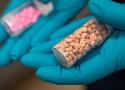
Researchers cannot yet say with confidence why deaths have gone down. Experts have offered multiple possible explanations: increased availability of the overdose-reversing drug naloxone, expanded addiction treatment, shifts in how people use drugs, and the growing impact of billions of dollars in opioid lawsuit settlement money.
Some also point to research that suggests the number of people likely to overdose has been shrinking, as fewer teens take up drugs and many illicit drug users have died.
Two other theories recently joined the list.
In a paper published last week in the journal Science, University of Maryland researchers point to the drug supply. They say regulatory changes in China a few years ago appear to have diminished the availability of precursor chemicals used to make fentanyl.
Their argument is based partly on information from the U.S. Drug Enforcement Administration, which last year reported that the purity — and dangerous potency — of fentanyl rose early in the COVID-19 pandemic but fell after 2022. It suggests it became harder to make fentanyl and its potency was diluted.
MANN: Yeah, it's pretty remarkable. When I first started reporting on fentanyl, A, most experts said stopping this drug or even slow [inaudible] significantly would be nearly impossible. That's because fentanyl is just easy to make from industrial chemicals. So drug policy experts I've been speaking to think Biden expanded health care and drug addiction treatment programs in ways that saved lives. And this new paper suggests Biden's team also convinced China to help curb the sale of so-called precursor chemicals that are needed to make fentanyl in ways that really hit the drug gangs hard. Again, here's Keith Humphreys.

The Biden administration was disrupting fentanyl traffickers — arresting and prosecuting key drug cartel leaders. Federal officials were also expanding public health and medical insurance programs, funneling more dollars to harm-reduction efforts and making it easier for people to access medications like naloxone and buprenorphine that help prevent overdoses.
An estimated 109,783 additional people would have died from opioid overdose if the population exposed to opioid overdose risk had remained constant rather than declining; an estimated 260,024 fewer people would have died from overdose if probability of fentanyl involvement in opioid overdose deaths had remained constant rather than increasing. Fentanyl's representation in the U.S. drug supply appears to be a key driver of overdose trends. A declining population exposed to overdose risk over the last decade may be related to prior deaths and to evidence-based efforts to prevent substance use and opioid use disorder.

“when you think of it, we shouldn't even have an election.”
The effects of climate change and global warming are already evident and shaking up our risk landscape: warmer average temperatures, rising sea levels, melting ice caps, longer and more frequent heatwaves, erratic rainfall patterns and more weather extremes.
A most urgent question we need to ask is not only how to tackle climate change, but also how we can best adapt to a changing climate and avert the most damaging consequences – in short, how to mitigate climate risk.

The most significant increase in these losses in relation to GNI was also visible in the US, where losses measured in terms of GNI rose steeply from decade to decade up to the last five years – by which time they were roughly five times the level between 1980 and 1989. There was a similarly sharp increase in Germany, due in no small part to the losses caused by the Ahr Valley floods in 2021.

The Defense Department has spent more than a year testing a device purchased in an undercover operation that some investigators think could be the cause of a series of mysterious ailments impacting spies, diplomats and troops that are colloquially known as Havana Syndrome, according to four sources briefed on the matter.
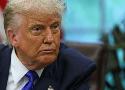
Trump has reportedly asked special forces to prepare contingency plans for a possible invasion of Greenland, a move that has faced resistance from senior US military officials over legal and political concerns.

Platform has restricted image creation on the Grok AI tool to paying subscribers, but victims and experts say this does not go far enough

Venezuelan guard recounts horrific effects of mystery sonic weapon used by US forces during raid that captured Nicolás Maduro, leaving soldiers bleeding from nose and vomiting blood.
The alleged use of sonic weaponry in the Maduro raid represents a significant escalation in demonstrated US military technology
US shale bosses have warned President Donald Trump that his mission to seize Venezuela’s oil sector and drive down crude prices will put American output on the chopping block.
Trump is set to meet US Big Oil chiefs on Friday, but executives at large independent drillers — who are not on the attendee list — are seething over the president’s plan to flood America with Venezuelan crude.
“We’re talking about this administration screwing us over again,” said a top executive at one of the country’s leading shale groups, describing the plans as “against American producers”.
“If the US government starts providing guarantees to oil companies to produce or grow oil production in Venezuela I’m going to be . . . pissed.”
Trump’s drive to open up Venezuela’s oil riches, potentially subsidising investors, has further strained relations with oil executives in Texas, who have been angered by his dogged pursuit of ever-lower crude prices.
The ire in the shale industry — where many executives bankrolled the president’s return to office — echoes a frustration in the Maga movement that Trump is neglecting his “America First” mantra.
But problems in Texas’s oil industry are mounting, as cheaper oil forces producers to idle rigs needed to keep production ticking higher.
The US is the biggest producer in the world, but its pivotal shale production requires continuous drilling to keep growing. The number of operating US oil rigs last week was just 412, down by 15 per cent in a year.
The Energy Information Administration forecasts that the US’s record-high output will fall by about 100,000 barrels a day in 2026 as drillers retreat — the first annual drop since the Covid-19 pandemic.
Trump flew to Texas multiple times in 2024 to tap deep-pocketed oil barons for cash, making executives angry at what some describe privately as a “betrayal”.
“To me, the signal from the administration is: we’d rather spend our American money on propping up a Venezuelan oil business than supporting our current independent businesses,” said Kirk Edwards, chief executive of Latigo Petroleum, a private producer based in Odessa, Texas, who donated to the president’s re-election campaign.
Only the biggest energy groups, such as ExxonMobil, Chevron and ConocoPhillips, have access to the tens of billions of dollars in capital, teams of lawyers and security protection needed for a foray into Venezuelan oil.
For smaller US operators, a revitalised Venezuelan industry — if Trump can pull it off — means worsening the market glut.
Shale drillers need a barrel of West Texas Intermediate, the US benchmark, to trade above $60 to turn a profit. Its price fell below $56 a barrel this week and the EIA said it would average $51 a barrel this year — a forecast made before Trump’s Venezuela move opened the prospect of a new wave of supply.
Exporters in the Opec cartel, including Saudi Arabia — which has launched two price wars in just over a decade to recapture market share from the US — have been adding production in recent months, triggering more alarm in Texas.
“I think it’s an appropriate reaction by US shale to be miffed,” said Dan Pickering, founder of Pickering Energy Partners. “Not just because Venezuelan production might go up but because the US government, in theory, is going to subsidise that.”
He added: “These guys are already worried about price. They live in a country where the president wants the price of their output to go down.”
Shares in the leading independent US oil groups tumbled this week as traders bet the Venezuelan oil surge would hit them hard. Diamondback Energy, APA Corp and Devon Energy each lost as much as 9 per cent.
“Somebody’s looking at these stocks today going, why would I own this if in a few years, they’re going to be competing against Venezuela for oil, for our refineries in the United States?” said Edwards.
The price of crude has halved since mid-2022 when WTI surged past $120 a barrel following Russia’s full-scale invasion of Ukraine. Gasoline prices have fallen to about $2.80 a gallon. As Trump looks ahead to midterm elections this year, he would prefer crude prices closer to $50 a barrel and gasoline below $2 a gallon.
US energy secretary Chris Wright said on Thursday that Big Oil’s arrival in Venezuela could push up its output as much as 50 per cent to 1.2mn barrels a day within 12 months.
“I think you’ll see more downward pressure on the price of gasoline,” he told Fox News.
Shale executives said Wright, a former oilfield services boss whose appointment by Trump was cheered in Texas, had abandoned his roots.
“He gets it [but] he is just toeing the party line,” said one Midland shale executive, who noted industry relations with Wright had grown strained.
But the executive placed more of the blame on Trump, saying there was “absolute frustration” in the industry at the president.
“He’s definitely not pro oil as far as independent oil companies’ survival and vibrancy. The message will have to come in US production declining,” the person said.
Trump’s comments this week that US taxpayers could help reimburse big oil groups that invest in Venezuela sparked more ire in the shale patch.
“We should not subsidise the big companies in trying to retool Venezuela’s infrastructure and develop their reserves for them,” said another prominent shale executive.
Trump, he said, did not care if smaller oil groups “drill their way into oblivion” and did not “give a damn if they went bankrupt”.
Analysts said the fallout made clear that as the prospects for future production moved beyond US shores, America’s well-resourced oil giants were now solidly in the ascendancy.
“All of this points to the advantage of being larger,” said Maynard Holt, chief executive of Houston-based energy consultancy Veriten.
“Because many of the opportunities that are coming — whether it’s Venezuela or Algeria or some other complicated place — you will be able to consider them more seriously the larger you are.”
One neighbor at Ross's 10-house cul-de-sac told the Daily Mail that until recently Ross had been flying pro-Trump flags and a 'Don't Tread On Me' Gadsden Flag, an emblem of the Make America Great Again movement.
"Firms don't appear to be replacing workers with AI on a significant scale," the firm said. It suspects some are trying to "dress up layoffs" as good news

"Firms don't appear to be replacing workers with AI on a significant scale," the firm said. It suspects some are trying to "dress up layoffs" as good news.

This interaction could help explain both why quantum processes can occur within environments like the brain and why we lose consciousness under anesthesia.