32 private links
4 percent think it’s a good idea for America to take Greenland by military force. To put that in context: According to a 2022 survey, about 13 percent of Americans believe in Bigfoot.
To watch the push for Greenland is to experience one of the wildest things that any country or head of state has done in the entire history of the modern world, dating back to the very creation of the nation-state era in 1648 with the Treaty of Westphalia.
At one level, Trump’s January rampage highlights the collective failure of every institution, safeguard, check, and balance that the United States thought it had in place to limit executive power gone berserk.

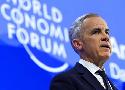
the longstanding U.S.-led, rules-based international order is over
“There may be a temptation to duck and hope that all of this passes. But Trump’s fixation on territorial expansion looks real,” he said, suggesting Canada should join European countries to show strong solidarity with Denmark.
Part of what made the liberal world order liberal was the principle of self-determination enshrined in the Atlantic Charter and United Nations Charter. This principle was sometimes violated, including by the United States. But in past multipolar orders, great powers never even had to consider the rights of small nations, and they didn’t. By contrast, the liberalism of the American order pressured powerful countries to cede sovereignty and independence to smaller ones in their orbits.
Moscow’s satellite states in Eastern and Central Europe would not have been so bent on escape had there been nothing to escape to. The American order promised a higher standard of living, national sovereignty, and legal and institutional equality. This gave nations living under the shadow of the Soviet Union an option other than accommodation, and when given the chance to leave Moscow’s control, they took it.
That era is over. Trump has managed in just one year to destroy the American order that was, and he has weakened America’s ability to protect its interests in the world that will be. If Americans thought defending the liberal world order was too expensive, wait until they start paying for what comes next.
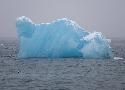
Only 8% of Americans support the U.S. using military force to take control of Greenland.
Only 13% of Americans support paying Greenland residents to encourage secession from Denmark.
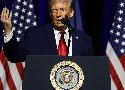
Venezuela owes international bondholders, oil companies and others as much as $170 billion — one reason why US firms have been reluctant to help rebuild the country’s infrastructure.
Trump told ConocoPhillips CEO Ryan Lance last week that the US is “not going to look at what people lost in the past, because that was their fault.”

"the agreement made the US the de facto protector of Greenland"

“It feels like an invasion,” said a woman who asked not to be named out of fear of retaliation. She was protesting at the Whipple federal detention facility at 7 a.m. on a frigid, 12-degree morning. The woman, a restaurant owner, said she closed her business temporarily because she was trying to protect her employees who were immigrants. “It feels very much like a Nazi Germany situation to me. It needs to stop, and people need to know what’s going on.”

“It is vital for the Golden Dome that we are building,” he said, referring to a proposed missile defence system.
Greenland and Denmark have repeatedly pointed out that a 1951 bilateral agreement already allowed the US to vastly expand its military presence on the island.
Only 4%, including just one in 10 Republicans and almost no Democrats, said military force would be a “good idea”.

In October 2023, the Sinaloa Cartel looked to publicly signal that it was moving away from fentanyl trafficking amid an intensifying crackdown on its operations by U.S. and Mexican authorities. As one of two major suppliers, this would be a significant shift, but it remains unclear how genuine this announcement was. In October 2025, the Treasury Department sanctioned a slew of companies and their affiliates for allegedly supplying fentanyl precursors to a faction of Sinaloa.

Researchers cannot yet say with confidence why deaths have gone down. Experts have offered multiple possible explanations: increased availability of the overdose-reversing drug naloxone, expanded addiction treatment, shifts in how people use drugs, and the growing impact of billions of dollars in opioid lawsuit settlement money.
Some also point to research that suggests the number of people likely to overdose has been shrinking, as fewer teens take up drugs and many illicit drug users have died.
Two other theories recently joined the list.
In a paper published last week in the journal Science, University of Maryland researchers point to the drug supply. They say regulatory changes in China a few years ago appear to have diminished the availability of precursor chemicals used to make fentanyl.
Their argument is based partly on information from the U.S. Drug Enforcement Administration, which last year reported that the purity — and dangerous potency — of fentanyl rose early in the COVID-19 pandemic but fell after 2022. It suggests it became harder to make fentanyl and its potency was diluted.
MANN: Yeah, it's pretty remarkable. When I first started reporting on fentanyl, A, most experts said stopping this drug or even slow [inaudible] significantly would be nearly impossible. That's because fentanyl is just easy to make from industrial chemicals. So drug policy experts I've been speaking to think Biden expanded health care and drug addiction treatment programs in ways that saved lives. And this new paper suggests Biden's team also convinced China to help curb the sale of so-called precursor chemicals that are needed to make fentanyl in ways that really hit the drug gangs hard. Again, here's Keith Humphreys.

The Biden administration was disrupting fentanyl traffickers — arresting and prosecuting key drug cartel leaders. Federal officials were also expanding public health and medical insurance programs, funneling more dollars to harm-reduction efforts and making it easier for people to access medications like naloxone and buprenorphine that help prevent overdoses.
An estimated 109,783 additional people would have died from opioid overdose if the population exposed to opioid overdose risk had remained constant rather than declining; an estimated 260,024 fewer people would have died from overdose if probability of fentanyl involvement in opioid overdose deaths had remained constant rather than increasing. Fentanyl's representation in the U.S. drug supply appears to be a key driver of overdose trends. A declining population exposed to overdose risk over the last decade may be related to prior deaths and to evidence-based efforts to prevent substance use and opioid use disorder.
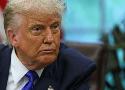
Trump has reportedly asked special forces to prepare contingency plans for a possible invasion of Greenland, a move that has faced resistance from senior US military officials over legal and political concerns.
Alexander Dugin, the fascist philosopher known as “Putin’s Rasputin”, said: “The capture of Maduro demonstrates that international law no longer exists — only the law of force applies.”
Alexey Pushkov, a Russian senator, accused the US of returning the world to “the savage imperialism of the 19th century”, adding: “Won’t the ‘triumph’ turn into a disaster?”
“The United States carried out a coup in Venezuela, struck the country, and demonstrated that international law means nothing to a nation that considers itself a hegemon,” said Igor Girkin, a former soldier and FSB officer turned commentator.
According to Michael Kofman, a Russian military analyst at the Carnegie Endowment for International Peace, the Trump administration’s decision to strike Venezuela without even the “veneer of justification” “substantially frays” any sense of international order.
He adds that it “will make it much harder in the future for the US to convince other states that this type of behaviour should be punished”.
“By using force to assert its hegemony in the Western Hemisphere, the US is trading these short-term gains for a long-term structural cost to its overall position in the international system and to the advantages it enjoys over its rivals Russia and China,” he said.
“We live in a world, in the real world, Jake, that is governed by strength, that is governed by force, that is governed by power,” he said. “These are the iron laws of the world since the beginning of time.”
The statements by the two men amount to an explicit declaration of gunboat diplomacy and an embrace of the kind of 19th-century U.S. imperialist policy in the Western Hemisphere that has been widely criticized across Latin America.
Senator Mark Warner of Virginia, the top Democrat on the Senate Intelligence Committee, said in an interview that decades-long efforts by the United States to prove it is not a colonial power in the Americas has been “all thrown out” now, and that Mr. Trump’s actions could “potentially turn the whole region against us.”
He added that the administration’s aim of dominating the Western Hemisphere — including forcibly seizing leaders in the region — could spur China and Russia to try to do the same in their perceived “spheres of influence.”
The world order as we knew it has been overturned.
By seizing a sitting head of state and announcing direct American administration over a sovereign country – without international authorisation, coalition partners or even the language of temporariness – he crossed a boundary the post-1945 international system was meant to keep intact.
Moody’s Ratings downgraded the United States’ debt on Friday, stripping the country of its last perfect credit rating. The move could rattle financial markets and push up interest rates, potentially creating an additional financial burden for Americans already struggling with tariffs and inflation.