32 private links
The main reason for the drop in corporate tax revenue is obvious: The TCJA slashed the corporate rate by 40 percent, from 35 percent to 21 percent. But the falloff in corporate revenue has been even sharper than expected.
Several months before the TCJA was enacted, the Congressional Budget Office (CBO) projected that corporate tax revenues for fiscal years 2018 and 2019 would total $668 billion. In the forecast published soon after the TCJA was enacted, however, the CBO projected $519 billion in corporate tax revenue over those two years—a $149 billion decrease. Actual corporate tax revenue over that period came in significantly lower, at $435 billion—a $233 billion drop. Essentially, corporations have already received $233 billion in tax cuts, $84 billion more than the CBO projected. To put that in perspective, the federal government spent just $47 billion on Pell Grants over the past two years.
The CBO’s adjusted forecasts now put the 10-year cost of corporate tax cuts at roughly $750 billion, $400 billion more than the pre-TCJA projections. That figure includes the temporary revenue from the TCJA’s repatriation provision, which gave corporations steeply discounted tax rates on stockpiles of overseas profits from prior years.

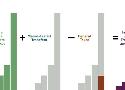

Revenues from corporate taxes have generally been declining as a share of GDP, in part as a result of lower tax rates and the increase in the prevalence of pass-through businesses.

Corporate income taxes accounted for 6 percent of total U.S. tax revenue in 2021.
This is partially because more than half of business income in the United States is reported on individual tax returns. Relative to other OECD countries, the U.S. approach to taxing business income boosts the share of tax revenue from individual income taxes in the U.S. and reduces the share of corporate tax revenue.

State governments collected $52 billion in revenue from corporate income taxes in 2020, or 2 percent of state general revenue.