32 private links

Still, it grates with Chen that big supermarkets and department stores facilitate the counterfeiters by dealing in knockoffs. “It is very discouraging. The patent system is not working if something is popular. With something like Hovertrax, the patent is almost useless.”
Chen acknowledges that the problem is the price. He has put out a cheaper version that is nearly half the cost of the original but he said there is only so far he can go. The counterfeits save production costs with weaker motors and low-quality batteries, but that leaves them underpowered and unstable, making riders more likely to fall. They are also more likely to catch fire, which is why some airlines have banned them. “We explain to consumers, this has to be built safely. It cannot be that cheap. They don’t care. They want it and they want cheap ones,” he said.

“Either we team up with the Americans to try to shape the global agenda, or the Asian countries will do it instead,” he said.
PC culture to the power of the CPC
I never thought more globalisation would see them beg for MORE censorship
“It’s truly inexcusable that the censors didn’t catch something like this”
“Capital deleted posts off the entire web, but in the end it can’t block the raging, surging, angry will of the people!”
“Hah, so you’d rather cut out the insulting part in the night without banning it outright? Sure, go ahead and help the foreigners save face!”
yikes, clearly the whole world needs to censor itself even when China isn't involved, so their feelings don't get hurt
“If there is no severe punishment, in the future others who want to humiliate China will just humiliate China, thinking it’s fine to just give those Chinese a version to screen with the insults cut out,”
Europe is also increasingly concerned about the future of Taiwan after Beijing imposed new national security laws on Hong Kong, increased its military presence in the Taiwan strait and released a stream of propaganda videos preparing the Chinese public for a potential invasion.
The Chinese Communist Party reinserted the word “peaceful” in its desire to unify with Taiwan through its Five Year Plan last week, after omitting it in May.
Democrats went for a soundbite that still somehow over-estimated the intelligence of the American public, while still missing the entire meal
"Trump commingled the personal and the national not just on trade questions but across the whole field of national security. I am hard-pressed to identify any significant Trump decision during my White House tenure that wasn’t driven by re-election calculations.
These and innumerable other similar conversations with Trump formed a pattern of fundamentally unacceptable behavior that eroded the very legitimacy of the presidency. Had Democratic impeachment advocates not been so obsessed with their Ukraine blitzkrieg in 2019, had they taken the time to inquire more systematically about Trump’s behavior across his entire foreign policy, the impeachment outcome might well have been different."
it's almost like having a racist tyrant-wannabe in power matters
"According to our interpreter, Trump said that Xi should go ahead with building the camps, which Trump thought was exactly the right thing to do. The National Security Council’s top Asia staffer, Matthew Pottinger, told me that Trump said something very similar during his November 2017 trip to China."
also someone with a "reflex to try to talk his way out of anything, even a public-health crisis"
"The NSC biosecurity team functioned exactly as it was supposed to. It was the chair behind the Resolute desk that was empty."
policy of the world's superpower is based in narcissism and weakness
"Most important of all, will Trump’s current China pose last beyond election day? The Trump presidency is not grounded in philosophy, grand strategy or policy. It is grounded in Trump. That is something to think about for those, especially China realists, who believe they know what he will do in a second term."
Many in the western business community are still hoping they can keep their heads down and continue to benefit from Hong Kong’s unique position in the world.
They are wrong — from a moral as well as a practical perspective.
Hong Kong is now the main battleground in an escalating cold war between China and what is left of the US-led liberal world order. Beijing’s decision to ignore the damage to its global reputation and defy its international treaty obligations under the Sino-British Joint Declaration on Hong Kong shows the Chinese Communist party already believes this.
China and the US have each made big mistakes. But the US failure to create widely shared prosperity at home, and its bellicosity abroad, are proving crippling. The dismal presidency of a malevolent incompetent is one result.
Worst of all, argues veteran anti-corruption campaigner, Frank Vogl, is a $500bn fund for big corporations likely to be under Mr Trump’s unsupervised control, which is contrary to the will of Congress.
A government at war with science and its own machinery is now very visible to all.
For those of us who believe in liberal democracy, these US failures hurt: they give credence to the idea that autocracy works better.
News, analysis and comment from the Financial Times, the worldʼs leading global business publication
The fact that China’s authoritarian system is particularly poor at dealing with public health emergencies that require timely, transparent and accurate information makes this far more significant than any other challenge Mr Xi has faced so far.
The death of the 34-year-old doctor marked a pivotal moment in the coronavirus outbreak, as its rapid spread presents President Xi Jinping with his gravest political and economic challenge since assuming power in 2012.
Authorities are struggling to contain public anger over the official mishandling of the outbreak that has killed more than 600 people. The crisis also threatens to undermine the central government’s narrative that it is in control of the rapidly evolving situation.
References to [Li's] passing had been viewed 270m times on Weibo, China’s Twitter-like platform, early on Friday after being announced by a Wuhan hospital.
Another Weibo user called Ren Xuanpan wrote “we all know it’s not the bat that kills people” — a reference to suggestions that the animal was the origin of the virus.
“The government has made Wuhan a living hell,” said another post.
Many users have posted lyrics to “Do you hear the people sing”, a song from the musical Les Misérables, to commemorate Li.
The Chinese government operates one of the world’s most comprehensive online censorship programmes and is able to cleanse social media of criticism of the government.
The hashtag “I want freedom of speech” was censored during the night and is now unsearchable on both Weibo and Douban, another social networking platform.
When dissident and Nobel laureate Liu Xiaobo died in custody in 2017, internet users posted candle emojis, an expression that was eventually blocked by the government.
During the last week of January, social media experts noted that a much higher degree of anti-government commentary — mainly anger at local government mismanagement of the crisis — had been permitted. But since the start of February, censors have stepped up efforts to remove negative comments.
many residents say it is nearly impossible to get the health care they need to treat — or even diagnose — the coronavirus
Layers of bureaucracy stand between residents and help. And the long lines outside hospitals for testing and treatment suggest that the outbreak is spreading far beyond the official count of cases.
“The situation that we’ve seen is much worse than what has been officially reported,” Long Jian, 32, said outside a hospital where his elderly father was being treated. Mr. Long said his father had to go to six hospitals and wait seven days before he could even be tested for the coronavirus.
“Those who can get diagnosed and treated are the lucky ones,” Mr. Long said. “In our neighborhood, many who weren’t able to get diagnosed ended up dying at home.”
“I’m very dissatisfied with the government,” Ms. Hu said. “It’s like only when the patients are close to death can they be admitted to a hospital.”
Tong Yixuan, 31, said Sunday that he panicked last week when he learned that in just a few days, his father’s cold had escalated into a full-blown illness that doctors said was almost certainly the coronavirus.
But neither his father, who had a 104-degree fever and was slipping in and out of consciousness, nor his mother, who was starting to show similar symptoms, could get tested. Hospitals said that there was no space, and that their symptoms were not severe enough, Mr. Tong said. His parents were sent home to quarantine themselves.
“This was an issue of inaction,” said Yanzhong Huang, a senior fellow for global health at the Council on Foreign Relations who studies China. “There was no action in Wuhan from the local health department to alert people to the threat.”
The first case, the details of which are limited and the specific date unknown, was in early December. By the time the authorities galvanized into action on Jan. 20, the disease had grown into a formidable threat.
It is now a global health emergency. It has triggered travel restrictions around the world, shaken financial markets and created perhaps the greatest challenge yet for China’s leader, Xi Jinping. The crisis could upend Mr. Xi’s agenda for months or longer, even undermining his vision of a political system that offers security and growth in return for submission to iron-fisted authoritarianism."
...
Beijing was involved from the get-go
"The day before, on Dec. 31, national authorities had alerted the World Health Organization’s office in Beijing of an outbreak."
...
“Stressing politics is always No. 1,” the governor of Hubei, Wang Xiaodong, told officials on Jan. 17, citing Mr. Xi’s precepts of top-down obedience. “Political issues are at any time the most fundamental major issues.”
Shortly after, Wuhan went ahead with a massive annual potluck banquet for 40,000 families from a city precinct, which critics later cited as evidence that local leaders took the virus far too lightly.
...
Wuhan’s mayor, Zhou Xianwang, later took responsibility for the delay in reporting the scale of the epidemic, but said he was hampered by the national law on infectious diseases. That law allows provincial governments to declare an epidemic only after receiving central government approval. “After I receive information, I can only release it when I’m authorized,” he said.
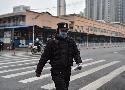
Even after cases were being reported in Thailand and South Korea, Wuhan officials organized holiday shopping fairs like the one Pan visited. They held a downtown community potluck attended by as many as 40,000 families. They distributed hundreds of thousands of tickets to local attractions.
“Everything was down to not collecting cases, not letting the public know,” said Dali Yang, a prominent scholar of China’s governance system at the University of Chicago. “They were still pushing ahead, wanting to keep up appearances.”
Without clear government warnings, people kept traveling — both within and beyond China.
Yang Jun, a prominent sales executive in the photovoltaic equipment industry, traveled to a meeting in Wuhan on Jan. 6 and returned home on the train to Beijing via Shanghai a week later.
A day before he checked himself into a hospital, he attended a school event with his daughter and sat in a lecture hall with hundreds of other parents, according to a statement released later by the Beijing school that asked all parents to quarantine themselves.
Yang died this week
...
In a Jan. 27 state media interview, Wuhan Mayor Zhou Xianwang said he was not authorized by his superiors to disclose the epidemic earlier
...
The Supreme People’s Court also issued an unusual statement admonishing the Wuhan police for detaining eight scientists.
“If society had at the time believed those ‘rumors,’ and wore masks, used disinfectant and avoided going to the wildlife market as if there were a SARS outbreak, perhaps it would’ve meant we could better control the coronavirus today,” the high court said. “Rumors end when there is openness.”
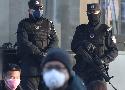
"Chinese authorities are cracking down on negative media coverage and social media commentary about the coronavirus outbreak, threatening anyone who breaches their rules with up to seven years in jail." including in private chats, with rumour defined as broadly as describing daily life
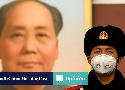
To maintain its authority, the Communist Party of China must keep the public convinced that everything is going according to plan. That means carrying out systemic cover-ups of scandals and deficiencies that may reflect poorly upon the party’s leadership, instead of doing what is necessary to respond.
But perhaps the most tragic part of this story is that there is little reason to hope that next time will be different. The survival of the one-party state depends on secrecy, media suppression and constraints on civil liberties. So, even as Chinese President Xi Jinping demands that the government increase its capacity
to handle “major risks”, China will continue to undermine its own – and the world’s – safety, to bolster the Communist Party’s authority.
When China’s leaders finally declare victory against the current outbreak, they will undoubtedly credit the party’s leadership. But the truth is just the opposite: the party is again responsible for this calamity.