Daily Shaarli
July 16, 2024

This section analyzes the data in two parts: terrorist incidents and fatalities. The data show three notable trends. First, right-wing attacks and plots accounted for the majority of all terrorist incidents in the United States since 1994. In particular, they made up a large percentage of incidents in the 1990s and 2010s. Second, the total number of right-wing attacks and plots has grown substantially during the past six years. In 2019, for example, right-wing extremists perpetrated nearly two-thirds of the terrorist attacks and plots in the United States, and they committed over 90 percent of the attacks and plots between January 1 and May 8, 2020. Third, although religious extremists were responsible for the most fatalities because of the 9/11 attacks, right-wing perpetrators were responsible for more than half of all annual fatalities in 14 of the 21 years during which fatal attacks occurred.
We introduce a conditional machine learning approach to forecast the stock index return. Our approach is designed to work well for short-horizon forecasts to ad
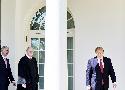
Inside the White House, however, news of Kennedy’s retirement didn’t come as a shock. In fact, as The New York Times reports, the 81-year-old’s announcement was the culmination of a carefully orchestrated 17-month campaign by the Trump administration to remake the Supreme Court before the 2018 midterms, when there is an outside chance that Republicans could lose their majority. For conservatives, Kennedy’s seat was seen as one of the keys to rolling back abortion rights—on the campaign trail, Trump pledged to appoint a justice who would overturn Roe v. Wade. But first, Trump had to demonstrate to Kennedy that he could be trusted to nominate quality jurists to the Supreme Court.
The grounds for that premise are obvious enough: Mitch McConnell’s audacious refusal to even consider confirming Barack Obama’s March 2016 nomination of Merrick Garland to fill the vacancy created by Antonin Scalia’s death just over a month earlier. That McConnell was acting strictly as a partisan warrior on this occasion was made clear in 2020, when he quickly discarded his stated prior opposition to presidential-election-year Supreme Court appointments and rushed Amy Coney Barrett’s confirmation through the Senate just weeks before Trump was defeated by Joe Biden.
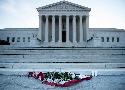
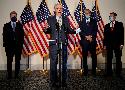
In March 2016, Senate Majority Leader Mitch McConnell tried to justify denying a vote on Obama’s nomination of DC Circuit Court Judge Merrick Garland to replace Justice Antonin Scalia: “All we are doing is following the long-standing tradition of not fulfilling a nomination in the middle of a presidential year.”
There is no such tradition. The table shows the nine Supreme Court vacancies in place during election years in the Court’s post-Civil War era—once Congress stabilized the Court’s membership at nine and the justices largely stopped serving as trial judges in the old circuit courts. Those nine election-year vacancies (out of over 70 in the period) were all filled in the election year—one by a 1956 uncontested recess appointment and eight by Senate confirmation.