32 private links
By analyzing $4 trillion of shipments between January 2024 and November 2025, the Kiel Institute researchers found that foreign exporters absorbed only about 4% of the burden of last year’s U.S. tariff increases by lowering their prices, while American consumers and importers absorbed 96%.


“I’m not even sure it’s legal! We contracted for the price on delivery,” he told the magazine. “If your price of fuel goes up or your truck breaks down, that’s not my problem! That’s what the contract’s for.”
But the tariff was not only legal, it’s his responsibility to pay it. Tariffs are paid by domestic importers, not foreign exporters, despite Trump’s frequent claims otherwise.
Since 1990 America has lost over 5mn manufacturing jobs. In that time, it has gained 11.8mn roles in professional and business services, and 3.3mn in transportation and logistical activities, linked to multinational supply chains.
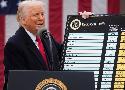
US President Donald Trump has slapped comprehensive tariffs on 185 countries worldwide, but not on Russia and Belarus. Why is that?

The imposition of tariffs on the Heard and McDonald islands was meant to close "ridiculous loopholes" and would prevent other countries from shipping through the islands to reach the US, Howard Lutnick told the BBC's US partner CBS.

unless you're Russia, Belarus, or Hungary
"The additional ad valorem duty on all imports from all trading partners shall start at 10 percent"
Corinth and Veuger write that if the tariffs had been calculated correctly, with the same ultimate goals in mind but using the right kind of elasticity figure, the levy on a country like Vietnam would have been 12.2% and not 46%.

They don’t hurt jobs or growth, aren’t trade or economic scoreboards, and can’t be fixed by tariffs.
We investigate whether firm-level political connections affect the allocation of exemptions from tariffs imposed on $US 550 billion of Chinese goods imported to the United States annually beginning in 2018. Evidence points to politicians not only rewarding supporters but also punishing opponents: Past campaign contributions to the party controlling (in opposition to) the executive branch increase (decrease) approval likelihood. Our findings point to quid pro quo arrangements between politicians and firms, as opposed to the “information” channel linking political access to regulatory outcomes.
a 1-standard-deviation increase in contributions to Republican (Democrat) candidates increases the probability of approval by 3.94 (decreases the probability of approval by 3.40) percentage points