32 private links
One such study, conducted by Lee Epstein of Washington University in St. Louis and Mitu Gulati of the University of Virginia, concluded that over the century ending in 2021 the court ruled for businesses an average of 41 percent of the time. But the court led by Chief Justice John G. Roberts Jr. since 2005 decided for businesses 63 percent of the time.
The study showed a growing partisan divide between the justices. In 1953, the study’s authors wrote, “Democratic and Republican appointees are statistically indistinguishable, deciding on average about 45 percent of the cases in favor of the rich.” By 2022, they wrote, “that share is about 70 percent for the average Republican justice and 35 percent for the average Democratic justice.”

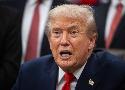
The Supreme Court has delayed direct conflict with Trump, but history suggests that will soon change
President Donald Trump's love affair with the Supreme Court could turn sour in the new year.
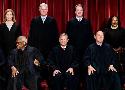
Chief Justice Roberts responded to the “momentous trio of Jan. 6-related cases…by deploying his authority to steer rulings that benefited Mr. Trump, according to a New York Times examination that uncovered extensive new information about the court’s decision making.”
In short, the Chief Justice used his powers to intervene and craft an opinion that some experts have said creates new law—certainly nothing that is found in the U.S. Constitution.
“There’s no legal authority for it,” remarked CNN legal analyst Norm Eisen back in December.
“The President of the United States is the most powerful person in the country, and possibly the world. When he uses his official powers in any way, under the majority’s reasoning, he now will be insulated from criminal prosecution. Orders the Navy’s Seal Team 6 to assassinate a political rival? Immune. Organizes a military dissenting coup to hold onto power? Immune. Takes a bribe in exchange for a pardon? Immune. Immune, immune, immune. Let the President violate the law, let him exploit the trappings of his office for personal gain, let him use his official power for evil ends. Because if he knew that he may one day face liability for breaking the law, he might not be as bold and fearless as we would like him to be. That is the majority’s message today.”
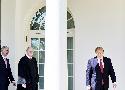
Inside the White House, however, news of Kennedy’s retirement didn’t come as a shock. In fact, as The New York Times reports, the 81-year-old’s announcement was the culmination of a carefully orchestrated 17-month campaign by the Trump administration to remake the Supreme Court before the 2018 midterms, when there is an outside chance that Republicans could lose their majority. For conservatives, Kennedy’s seat was seen as one of the keys to rolling back abortion rights—on the campaign trail, Trump pledged to appoint a justice who would overturn Roe v. Wade. But first, Trump had to demonstrate to Kennedy that he could be trusted to nominate quality jurists to the Supreme Court.
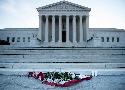

In March 2016, Senate Majority Leader Mitch McConnell tried to justify denying a vote on Obama’s nomination of DC Circuit Court Judge Merrick Garland to replace Justice Antonin Scalia: “All we are doing is following the long-standing tradition of not fulfilling a nomination in the middle of a presidential year.”
There is no such tradition. The table shows the nine Supreme Court vacancies in place during election years in the Court’s post-Civil War era—once Congress stabilized the Court’s membership at nine and the justices largely stopped serving as trial judges in the old circuit courts. Those nine election-year vacancies (out of over 70 in the period) were all filled in the election year—one by a 1956 uncontested recess appointment and eight by Senate confirmation.
The grounds for that premise are obvious enough: Mitch McConnell’s audacious refusal to even consider confirming Barack Obama’s March 2016 nomination of Merrick Garland to fill the vacancy created by Antonin Scalia’s death just over a month earlier. That McConnell was acting strictly as a partisan warrior on this occasion was made clear in 2020, when he quickly discarded his stated prior opposition to presidential-election-year Supreme Court appointments and rushed Amy Coney Barrett’s confirmation through the Senate just weeks before Trump was defeated by Joe Biden.