32 private links
Advanced Strategy to Account for Correlations, Risk, and Returns in your Portfolio Leveraging Hierarchical Structures

We propose a decentralized variant of Monte Carlo tree search (MCTS) that is suitable for a variety of tasks in multi-robot active perception. Our algorithm allows each robot to optimize its own actions by maintaining a probability distribution over plans in the joint-action space. Robots periodically communicate a compressed form of their search trees, which are used to update the joint distribution using a distributed optimization approach inspired by variational methods. Our method admits any objective function defined over robot action sequences, assumes intermittent communication, is anytime, and is suitable for online replanning.
Deep reinforcement learning has achieved great successes inrecent years, however, one main challenge is the sample in-efficiency. In this paper, we focus on how to use action guid-ance by means of a non-expert demonstrator to improve sam-ple efficiency in a domain with sparse, delayed, and pos-sibly deceptive rewards: the recently-proposed multi-agentbenchmark of Pommerman. We propose a new frameworkwhere even a non-expert simulated demonstrator, e.g., plan-ning algorithms such as Monte Carlo tree search with a smallnumber rollouts, can be integrated within asynchronous dis-tributed deep reinforcement learning methods. Compared to avanilla deep RL algorithm, our proposed methods both learnfaster and converge to better policies on a two-player miniversion of the Pommerman game.

Ax and BoTorch leverage probabilistic models that make efficient use of data and are able to meaningfully quantify the costs and benefits of exploring new regions of problem space. In these cases, probabilistic models can offer significant benefits over standard deep learning methods such as neural networks, which often require large amounts of data to make accurate predictions and don’t provide good estimates of uncertainty.
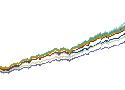
GPU speedup: XGBoost 7.3x, LightGBM 3.6x (excluding goss results), Catboost 3.3x
"while XGBoost can explore its space of hyper-parameters very fast, it does not always locate the configuration that results in the best score. While it clearly wins in both multi-class ranking tasks (Microsoft, Yahoo), for the Higgs dataset it loses to LightGBM, despite the latter being significantly slower. Furthermore, for the Epsilon dataset XGBoost cannot be used due to memory limitations.
... there are tasks for which LightGBM, albeit slower, can converge to a solution that generalizes better. Furthermore, for datasets with a large number of features, XGBoost cannot run due to memory limitations, and Catboost converges to a good solution in the shortest time. Therefore, while we observe interesting trends, there is still no clear winner in terms of time-to-solution across all datasets and learning tasks. The challenge of building a robust GPU-accelerated GBDT framework that excels in all scenarios is thus very much an open problem."

Lookahead+RAdam vs. Adam on some RL benchmarks
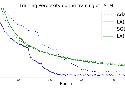
"The Ranger optimizer combines two very new developments (RAdam + Lookahead) into a single optimizer for deep learning. As proof of it’s efficacy, our team used the Ranger optimizer in recently capturing 12 leaderboard records on the FastAI global leaderboards (details here).
Lookahead, one half of the Ranger optimizer, was introduced in a new paper in part by the famed deep learning researcher Geoffrey Hinton (“LookAhead optimizer: k steps forward, 1 step back” July 2019). Lookahead was inspired by the recent advances in the understanding of neural network loss surfaces and presents a whole new way of stabilizing deep learning training and speed of convergence. Building on the breakthrough in variance management for deep learning achieved by RAdam (Rectified Adam), I find that combining RAdam plus LookAhead together (Ranger) produces a dynamic dream team and an even better optimizer than RAdam alone."
AlphaStock fully exploits the interrelationship among stocks, and
opens a door for solving the “black box” problem of using deep learning models in financial markets. The back-testing and simulation experiments over U.S. and Chinese stock markets showed that
AlphaStock performed much better than other competing strategies. Interestingly, AlphaStock suggests buying stocks with high long-term growth, low volatility, high intrinsic value, and being
undervalued recently.
deep reinforcement learning algorithms to automatically generate consistently profitable, robust, uncorrelated trading signals in any general financial market.
sharpes 3-5
The mean-variance optimization (MVO) theory of Markowitz (1952) for portfolio selection is one of the most important methods used in quantitative finance. This portfolio allocation needs two input parameters, the vector of expected returns and the covariance matrix of asset returns. This process leads to estimation errors, which may have a large impact on portfolio weights. In this paper we review different methods which aim to stabilize the mean-variance allocation. In particular, we consider recent results from machine learning theory to obtain more robust allocation.
paper http://www.thierry-roncalli.com/download/Portfolio_Regularization.pdf

by using neural nets we are able to outperform cache-optimized B-Trees by up to 70% in speed while saving an order-of-magnitude in memory over several real-world data sets

A major attraction of the Black–Litterman approach for portfolio optimization is the potential for integrating subjective views on expected returns. In this article, the authors provide a new approach for deriving the views and their uncertainty using predictive regressions estimated in a Bayesian framework. The authors show that the Bayesian estimation of predictive regressions fits perfectly with the idea of Black–Litterman. The subjective element is introduced in terms of the investors’ belief about the degree of predictability of the regression. In this setup, the uncertainty of views is derived naturally from the Bayesian regression, rather than by using the covariance of returns. Finally, the authors show that this approach of integrating uncertainty about views is the main reason this method outperforms other strategies.
In this article, the author introduces the Hierarchical Risk Parity (HRP) approach to address three major concerns of quadratic optimizers, in general, and Markowitz’s critical line algorithm (CLA), in particular: instability, concentration, and underperformance. HRP applies modern mathematics (graph theory and machine-learning techniques) to build a diversified portfolio based on the information contained in the covariance matrix. However, unlike quadratic optimizers, HRP does not require the invertibility of the covariance matrix. In fact, HRP can compute a portfolio on an ill-degenerated or even a singular covariance matrix—an impossible feat for quadratic optimizers. Monte Carlo experiments show that HRP delivers lower out-ofsample variance than CLA, even though minimum variance is CLA’s optimization objective. HRP also produces less risky portfolios out of sample compared to traditional risk parity methods.

accepted papers at:
BayesOpt 2017
NIPS Workshop on Bayesian Optimization
December 9, 2017
Long Beach, USA
