32 private links
implement the official plan.
Article content
“The Official Plan directs how the city will grow for the next 25 years and we’re trying to focus growth to locations where it’s going to make the most sense for the city — in a bunch of different ways, like around transit stations — to make complete, livable communities and a financially sustainable city,” said Carol Ruddy, the city’s manager of zoning and intensification.
Ottawa’s current zoning bylaws were largely carried over from pre-amalgamation cities and towns, dividing the city’s neighbourhoods into five zones — labelled R1 to R5 — with sub-categories and distinct regulations resulting in more than 140 variations, with about 600 variations within those sub-categories.

looks like in 26-27 we're lowering the housing gap? house formation looks like it's 60-70k reading off the graph and net construction is 260-280k? so like 3 more years at that rate would close it, looks like. it's pretty deceptive how they only talk about the 5-year totals, where there is a gap.
Canada would need to build some 2.3 million housing units between 2025 and 2030 to close the housing gap, and is currently on pace to complete 1.7 million homes by that time, according to the PBO.

Canada's home ownership crisis is likely to worsen over the next few years as proposed project sales languish at historically low levels, stalling the funding needed for construction, half a dozen economists and realtors told Reuters.
According to federal housing agency CMHC's Housing Supply Report from last month where it cites an independent study, new condominium sales were down more than half in the first six months of 2024 than in the same period a year ago.
Aled ab Iorwerth, deputy chief economist at CMHC, who co-authored the report said there are many developers who need money to start planned condo projects.
let's stunt demographic growth because we can't figure out how to build more houses
“These people don’t have steady jobs or income in Canada,” he alleged, “but what they are doing is scams to launder money, and get mortgages using fake documents.”
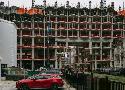
The Canadian government is underestimating the number of new homes needed to address a spiraling affordability crisis by about 1.5 million units



Kavcic puts the current plan into perspective to show the type of scale required. “For additional context, at 2.5 people per household, we’d need more than 170k new units every three months at this rate of population growth, even before accounting for domestic household formation,” he explains.
The industry is currently pushed to the max trying to churn out 220k homes per year. That’s a significantly higher number than previous years, but still roughly a quarter of the amount that would be needed to accommodate the supply-side plan.
In her report, Bonnie Lysyk, the auditor general, concluded that the process for picking the land for development was largely directed by the housing minister’s chief of staff. And the report found that process was heavily influenced by two developers who, at a housing conference, handed the political aide envelopes detailing the land they wanted removed from the Greenbelt. The aide then directed a selection process that sidelined the usual reviews by nonpartisan public servants and proper public consultations.
In the end, Ms. Lysyk found, the aide picked 14 of the 15 parcels of land that were removed from the Greenbelt.
“We found that how the land sites were selected was not transparent, fair, objective, or fully informed,” Ms. Lysyk wrote, adding: “What occurred here cannot be described as a standard or defensible process.”
Land owned by those two developers, she concluded, makes up 92 percent of the Greenbelt land now open to development. That change, the audit calculated, raised the land’s value by 8.3 billion Canadian dollars.

"The fact that so many households depend on rising home equity gains to generate wealth for their families speaks to the failure of our “financialized” economy, where money is increasingly made from holding or inheriting assets alone, not productive, collaborative, and meaningful work. If we are to truly fix Canada’s housing system, we need to wean households off their growing reliance on the inflation of asset prices."
Rigor is a community finance network for residential construction.
Powered by Build Protocol.
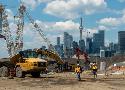

"several analysts who spoke with CTVNews.ca say one thing is clear: without substantial increases to Canada's housing supply, prices will only continue to rise far faster than the rate of inflation, leaving those who don't already own a home even further behind"
"while the measures announced to date may have some short-term impact on house prices, keeping the market from spiralling out of control again in the future will require a different way of thinking – and likely upsetting some apple carts in the process.
"In the long run, we're going to have to build more housing," Moffatt said.
"That's going to mean some difficult decisions around zoning, around urban growth boundaries, around social housing."