32 private links
"Systematically identifying clusters of similar assets is a critical step in statistical arbitrage strategies... Profitability is influenced more by the selection of feature sets and clustering methods than by the choice of signals."


We’re on a journey to advance and democratize artificial intelligence through open source and open science.
We explore tree-based macroeconomic regime-switching in the context of the dynamic Nelson-Siegel (DNS) yield-curve model.
hybrid LSTM models, significantly outperform the traditional GARCH models
Twitter isn’t only the biggest hung deal by dollar amount since the 2008 financial crisis but one of the biggest of all time.
X’s business is still struggling to climb out of the deep hole it fell into under his ownership—the company last year said its value had fallen by more than half, to around $19 billion.
Contribute to franckalain/financial-machine-learning development by creating an account on GitHub.

Liquid alternative strategies, specifically trend-following and long/short quality stocks, could be viewed as the new bonds.
We introduce a conditional machine learning approach to forecast the stock index return. Our approach is designed to work well for short-horizon forecasts to ad

Jupyter Notebook Regression-based statistical learning helps build trading signals from multiple candidate constituents. The method optimizes models and hyperparameters sequentially and produces point-in-time signals for backtesting and live trading. This post applies regression-based learning to macro trading factors for developed market FX trading, using a novel cross-validation method for expanding panel data. Sequentially optimized models […]
Statistical arbitrage is a prevalent trading strategy which takes advantage of mean reverse property of spread of paired stocks. Studies on this strategy often rely heavily on model assumption. In...
Advanced Strategy to Account for Correlations, Risk, and Returns in your Portfolio Leveraging Hierarchical Structures
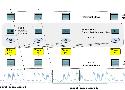

advantages and disadvantages of various regression methods, including non-negative least squares, elastic net, weighted least squares, least absolute deviations, and nearest neighbors
Motivated by recent advances in large language models for Natural Language Processing (NLP), we design a time-series foundation model for forecasting whose out-of-the-box zero-shot performance on a variety of public datasets comes close to the accuracy of state-of-the-art supervised forecasting models for each individual dataset. Our model is based on pretraining a patched-decoder style attention model on a large time-series corpus, and can work well across different forecasting history lengths, prediction lengths and temporal granularities.

To better control for risk, we construct a novel machine learning based value factor and find that it outperforms existing value factors while earning less from risk and more from mispricings.
a high carry predicts future crypto price crashes. They further imply that there is “excess volatility” of crypto futures relative to spot prices, i.e. our estimates imply that changes in futures prices are about ten times more volatile than changes in spot prices
the crypto futures basis tends to be elevated when smaller entities seek leveraged upside exposure.
We document return predictability from deep-learning models that cannot be explained by common risk factors or limits to arbitrage.
a strong positive effect of debt refinancing risk, as measured by refinancing intensity, on excess bond returns in the subsequent year, supporting the rollover risk channel
This paper examines the factor momentum in commodity futures markets. Using data from the developed markets from 1985 to 2022, we first show that a commodity fac