32 private links
Bankruptcies soared to a 15-year high in 2025 as companies struggled to cope with Trump’s trade wars
No fewer than 717 companies filed for Chapter 7 or Chapter 11 bankruptcy between January and November, according to S&P data reviewed by The Washington Post. This marks a 14 percent increase from the same period in 2024 and the highest rate since 2010, when the country was recovering from the Great Recession

Increased extreme heat is among the clearest impacts of global warming, but the economic effects of heat waves are poorly understood. Using subnational economic data, extreme heat metrics measuring the temperature of the hottest several days in each year, and an ensemble of climate models, we quantify the effect of extreme heat intensity on economic growth globally. We find that human-caused increases in heat waves have depressed economic output most in the poor tropical regions least culpable for warming. Cumulative 1992–2013 losses from anthropogenic extreme heat likely fall between $16 trillion and $50 trillion globally. Losses amount to 8% of Gross Domestic Product per capita per year for regions in the bottom income decile, but only 3.5% for regions in the top income decile. Our results have the potential to inform adaptation investments and demonstrate how global inequality is both a cause and consequence of the unequal burden of climate change.
Since 1990 America has lost over 5mn manufacturing jobs. In that time, it has gained 11.8mn roles in professional and business services, and 3.3mn in transportation and logistical activities, linked to multinational supply chains.
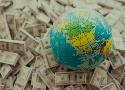
They don’t hurt jobs or growth, aren’t trade or economic scoreboards, and can’t be fixed by tariffs.

Tax cuts for the wealthy didn't boost the economies of the U.S. and 17 other countries — but they did worsen income inequality.
"Based on our research, we would argue that the economic rationale for keeping taxes on the rich low is weak," Julian Limberg, a co-author of the study and a lecturer in public policy at King's College London, said in an email to CBS MoneyWatch. "In fact, if we look back into history, the period with the highest taxes on the rich — the postwar period — was also a period with high economic growth and low unemployment."
Already, Mr. Trump's tax cuts have lifted the fortunes of the ultra-rich, according to 2019 research from two prominent economists, Emmanuel Saez and Gabriel Zucman of the University of California at Berkeley. For the first time in a century, the 400 richest American families paid lower taxes in 2018 than people in the middle class, the economists found.
Only about half the U.S. population is invested in the stock market through their retirement and savings accounts, and even then more than 80% of all stocks are owned by the richest 10%.
We provide the first nationally representative long-run series (1870–2020) of incarceration rates for immigrants and the US-born. As a group, immigrants have had lower incarceration rates than the US-born for 150 years. Moreover, relative to the US-born, immigrants' incarceration rates have declined since 1960: immigrants today are 60 percent less likely to be incarcerated (30 percent relative to US-born Whites). This relative decline occurred among immigrants from all regions and cannot be explained by changes in observable characteristics or immigration policy. Instead, the decline is part of a broader divergence of outcomes between less-educated immigrants and their US-born counterparts.
New research suggests that the company makes the communities it operates in poorer—even taking into account its famous low prices.

Then economists began analyzing what actually happened when the minimum wage was raised. Since the early 1990s, economists have conducted dozens of studies of more than 500 minimum-wage increases across the country. “The bulk of the studies conducted in the last 30 years suggest the effect of minimum wages on jobs is quite modest,” Arindrajit Dube, an economist at the University of Massachusetts at Amherst who has conducted multiple meta-analyses of the minimum-wage literature, told me. “Sometimes they actually result in higher employment.”
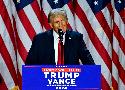
A note from Capital Economics late Tuesday night crystallized some of the macroeconomic worries. The authors wrote that they expected Trump to push forward on his proposed immigration curbs and tariffs and as a result “we are minded to reduce our GDP growth forecast... by roughly 1% and add 1% to our inflation forecast over the same period.”

Kamala Harris’s economic policies proved far more popular than Donald Trump’s plans in a blind test of their proposals.
Four of the top five most popular proposals were from the Democratic candidate’s campaign, according to a new Harris Poll conducted exclusively for the Guardian.

More than half of the living US recipients of the Nobel Prize for economics signed a letter that called Vice President Kamala Harris’ economic agenda “vastly superior” to the plans laid out by former President Donald Trump.

The central pillar of Trump’s economic plan is widespread tariffs on all imported goods, with penalties appearing to increase depending on how much he dislikes the country. Economists have warned that such a policy could have devastating effects on American consumers, who would be saddled with increased costs for all imported goods.
When questioned about the specifics of his plan, and if he was aware of its pitfalls, Trump seemed ignorant of basic economic principles, insisting that other countries, not American consumers, would pay for the tariffs.
Micklethwait tried to explain the actual impact. “Three-trillion worth of imports and you will add tariffs to every single one of them, and push up the cost for all of these people to buy foreign goods,” he said. “That is just simple mathematics.”
In search of a successor to the Li Keqiang Index.
What really broke the Li Keqiang index was the covid-19 pandemic. The decline in retail sales, air travel and the property market was far more dramatic than the slowdown in industry, electricity use or rail freight. Meanwhile, m2 grew quickly at the end of last year as people hoarded cash.

"discontent didn't stem from the government's inability to generate wealth instead it was a response to an all too familiar pattern reminiscent of the colonial era: most of the country's newfound riches were being concentrated in the hands of only a select few."

Javier Milei has been Argentina's president for half a year - how has it gone?

a high carry predicts future crypto price crashes. They further imply that there is “excess volatility” of crypto futures relative to spot prices, i.e. our estimates imply that changes in futures prices are about ten times more volatile than changes in spot prices
the crypto futures basis tends to be elevated when smaller entities seek leveraged upside exposure.

a strong positive effect of debt refinancing risk, as measured by refinancing intensity, on excess bond returns in the subsequent year, supporting the rollover risk channel

Donald Trump’s 2016 victory was widely explained as a working class revolt against despair, deindustrialization, or neoliberalism. But broadly-shared prosperity under Biden hasn’tt reduced Trump’s support at all, showing his appeal was always social.