32 private links
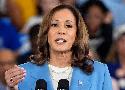
Harris campaign spokesman James Singer told NBC News that she would push for a 28% corporate tax rate, calling it “a fiscally responsible way to put money back in the pockets of working people and ensure billionaires and big corporations pay their fair share.”
“As President, Kamala Harris will focus on creating an opportunity economy for the middle class that advances their economic security, stability, and dignity,” Singer wrote in an email.

Harris campaign spokesperson James Singer said the move would be part of "a fiscally responsible way to put money back in the pockets of working people and ensure billionaires and big corporations pay their fair share."
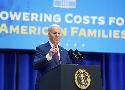
According to the White House, the budget aims to reduce the federal deficit by $3 trillion over the next 10 years largely by imposing a minimum 25% tax rate on the unrealized income of the very wealthiest households and by reshaping the corporate tax code. Biden’s budget would raise taxes for billion-dollar companies from 15% to 21% and hike the broader corporate tax rate to 28%.

2021 study found that Americans reject this policy by a three-to-one margin, including a significant 76% of independent voters.

The U.S. has 9,850 centi-millionaires
In short, it was an unforced error by the Biden administration to include something in its FY24 and FY25 budgets that had almost no chance of becoming law, for the sake of campaign rhetoric about making billionaires "pay their fair share."
The Biden proposal, which you can find on page 83 of this document, doesn't cover all unrealized capital gains. Most startups founders and employees would be unaffected.
First, it only applies to those with $100 million in wealth (defined as assets minus liabilities). Second, even for that group, it only would apply if 80% or more of the person's wealth comes from liquid assets (i.e., not startup stock).
If an individual is considered illiquid — e.g., a startup founder with $100 million in wealth, but $90 million of that in their company's stock — they could defer the unrealized tax payments until exit (and then it's only up to a cumulative 10% of unrealized gains).
The billionaire minimum tax, as it is commonly known, would increase the complexity of the tax code by using a non-traditional and difficult-to-measure definition of income. It would require formulaic rules for valuing different types of assets, payment periods that vary by asset type, and a separate tax system to deal with illiquid assets. This tax design goes well beyond international norms, where capital gains are taxed when realized and at lower rates than the US in many cases.
A shift in tax policy towards tapping revenue streams in unrealized gains is almost certainly on the horizon, it is just a matter of degree. A tax on unrealized gains will need to be carefully calibrated and accounted for, targeted first towards high net worth individuals and liquid assets, to avoid the administrative and political quagmire of valuation and ability-to-pay concerns. Notwithstanding the precision in policy required, absent intervention, the existing imbalances that have allowed vast amounts of wealth to grow, essentially tax-free, will persist.
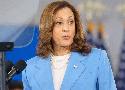
the most striking proposal is what IFC Media, the leading publishing house for the global wealth management industry, calls a “radical departure from normal taxation” — the taxing of unrealized gains for the ultra-rich.
An old investing adage is you don’t lose anything until you sell. Conversely, since unharvested returns are still unrealized gains, they’re not subject to taxation — at least not yet.
Her proposed 25% tax on unrealized gains for centi-millionaires with nine-figure fortunes or more would be a watershed moment for U.S. tax policy.
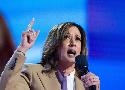
a 25% tax on billionaire wealth is extremely popular with U.S. voters across the political spectrum. A survey in March of last year by Data for Progress found that 87% of Democrats, 68% of Independents and third-party voters, and 51% of Republicans back the idea
The proposal would impose a minimum tax of 25 percent on total income, generally inclusive of unrealized capital gains, for all taxpayers with wealth (that is, the difference obtained by subtracting liabilities from assets) greater than $100 million.
The proposal would impose a minimum tax of 25 percent on total income, generally inclusive of unrealized capital gains, for all taxpayers with wealth (that is, the difference obtained by subtracting liabilities from assets) greater than $100 million.
Mr. Biden and Ms. Harris seek to raise business and personal tax rates, tax unrealized capital gains, and even help foreign countries raise taxes on U.S. companies.
We propose a billionaire minimum tax, requiring the wealthiest Americans to pay at least 25 percent on all of their income, including appreciated assets—because no billionaire should ever pay a lower tax rate than a school teacher or a firefighter.
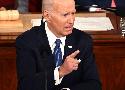
... a 25 percent tax on all wealth over $100 million, estimated to apply to just 0.01 percent of Americans.
It also proposes levying an unrealized capital gains tax for the first time in US history. Much of the power and influence that the ultra-wealthy wield comes from the value of the assets they currently own. Elon Musk, one of the richest people on Earth, was able to buy Twitter for $44 billion not because he had that much cash in a savings account, but because he was worth north of $250 billion and owned so many valuable assets, such as his stakes in Tesla and SpaceX, that he could leverage to finance the deal.