32 private links
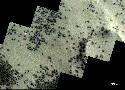
They're not actual spiders, of course, but rather strange geological features.

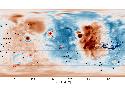
Gravity study gives insights into hidden features beneath lost ocean of Mars and rising Olympus Mons
Studies of gravity variations at Mars have revealed dense, large-scale structures hidden beneath the sediment layers of a lost ocean. The analysis, which combines models and data from multiple missions, also shows that active processes in the Martian mantle may be giving a boost to the largest volcano in the solar system, Olympus Mons.
"These dense structures could be volcanic in origin or could be compacted material due to ancient impacts. There are around 20 features of varying sizes that we have identified dotted around the area surrounding the north polar cap—one of which resembles the shape of a dog
Although volcanoes are very dense, the Tharsis area is much higher than the average surface of Mars, and is ringed by a region of comparatively weak gravity. This gravity anomaly is hard to explain by looking at differences in the Martian crust and upper mantle alone. The study by Dr. Root and his team suggests that a light mass around 1750 kilometers across and at a depth of 1100 kilometers is giving the entire Tharsis region a boost upwards. This could be explained by huge plume of lava, deep within the Martian interior, traveling up towards the surface.