32 private links


"the wealth tax is likely to be the most direct and powerful tool to restore tax progressivity at the very top of the distribution"
"our analysis shows that the wealth tax has great revenue and wealth equalizing
potential in the US context. The wealth tax, if the tax rates are high enough, is also a powerful tool to deconcentrate wealth. A wealth tax of 2 or 3% per year can put a significant dent into this growth rate advantage. With successful enforcement, a wealth tax has to deliver either revenue or de-concentrate wealth.79 Set the rates low (1%) and you get revenue in perpetuity but little (or very slow) de-concentration. Set the rates medium (2-3%) and you get revenue for quite a while and de-concentration eventually. Set the rates high (significantly above 3%) and you get de-concentration fast but revenue does not last long. Which is best will depend of course on ones political views."
"Can a wealth tax be successfully enforced? Our review of past and foreign experiences, as well as recent empirical work tells us that enforcement is a policy choice."
"The wealth tax accelerates the process of dispersion of stock ownership for very successful businesses that make their owners-founders billionaires. Dispersed stock ownership has been a feature of US capitalism and is a key reason why taxing wealthy business owners is feasible. Importantly and in contrast to labor income, this dispersion does not mean that economic activity disappears. There might not be even any effect on the wealth stock if the government uses the wealth tax proceeds for public investment, debt reduction, or to create a sovereign fund. The wealth disappears only if the government cannot save the money and cannot encourage middle class saving."




Arbitrageurs have long sought to exploit the idea of purchasing-power parity
“Few empirically literate economists take PPP seriously as a short-term proposition,” Ken Rogoff of Harvard University once pointed out, but most believe it has some anchoring power over the long run. It gives investors something to chew on. But it’s not fast food.


millenials have all the reason in the world to burn it all down, experiencing a second once-in-a-lifetime downturn in like a dozen years "near guaranteeing that they will be the first generation in modern American history to end up poorer than their parents" when normal things like housing and job safety are no longer even on offer even in boom times.
unlike the great financial crisis, this time people are willing to genuinely question the basic makeup of society. makes sense when it's an outside-in crisis, impacting society everywhere resulting in economic impact. last time, being an inside-out crisis stemming from financial markets, few people called for any kind of major overhaul of the system, and think they were mostly written off as kooks. things were patched over with traditional methods, liquidity, QE, regulation.
now people are going much further, thanks to bernie/AOC/yang creating real discussion about fundamental change. recent events making that argument much more palatable. many trump supporters and nonsupporters favour radical change from where we are now. visible direct conflict between major powers (russia, US, UK/EU, China) beg the question of "what's the right system?" and the many flaws in each of the existing ones. change is on everyone's minds
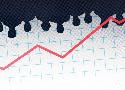
This bull market is built on sand
China and the US have each made big mistakes. But the US failure to create widely shared prosperity at home, and its bellicosity abroad, are proving crippling. The dismal presidency of a malevolent incompetent is one result.
Worst of all, argues veteran anti-corruption campaigner, Frank Vogl, is a $500bn fund for big corporations likely to be under Mr Trump’s unsupervised control, which is contrary to the will of Congress.
A government at war with science and its own machinery is now very visible to all.
For those of us who believe in liberal democracy, these US failures hurt: they give credence to the idea that autocracy works better.
bold thinking from a guy who knows a thing or two. change to the establishment being proposed by the establishment.
"Current supervisory tools were designed to restrain banks from overextending themselves. Right now, we have the opposite problem: banks are not filling the void left by the retreat of market-based finance.
Banks should be part of the solution, not part of the problem. Now is the time to draw on the accumulated balance sheet buffers that were built while the sun was shining. To boost lending capacity further, we need a global freeze on bank dividends and share buybacks.
However, this first step may not be enough, as lenders pull in their horns and retreat from risk-taking. That’s why there needs to be a second step of enlisting the banks to lend, using central bank funding for lending schemes. Risk sharing by governments through guarantee schemes is needed to ensure that economic risks are not pushed to banks or the central bank.
A crisis in market finance needs market-based solutions. For central bank liquidity to reach the far corners of the financial system, it must directly target individuals and businesses that need it most. Otherwise, central bank actions may be just pushing on a string."
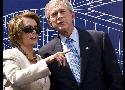
bush Pelosi check mailouts
"The Growth Delusion" is an accessible book that examines one of the most fundamental—yet flawed—concepts in economics.