
To offset negative externalities imposed on displaced workers from rapid automation, taxes on automation might be considered in this scenario.
... the possibility of using taxes on AI consumption to support workforce development initiatives.
... it could potentially be funded through taxes on AI-driven revenues from firms above a certain high level of market capitalization.
... exploring a "low-rate business wealth tax" as a complement to income taxes.
Low: Invest in upskilling through workforce training grants, Reform tax incentives for worker retention and retraining, Close corporate tax loopholes, Accelerate permits and approvals for AI infrastructure
Moderate: Establish trade adjustment assistance for AI displacement (skill training), Implement taxes on compute or token generation
High: Create national sovereign wealth funds with stakes in AI, Adopt or modernize value-added taxes, Implement new revenue structures to account for AI’s growing share of the economy
If AI winds up controlled by, and benefiting only a few, while most people lack agency and access to AI-driven opportunity, we will have failed to deliver on its promise.
Without thoughtful policies, AI could widen inequality by compounding advantages for those already positioned to capture the upside while communities that begin with fewer resources fall further behind, excluded from new tools, new industries, and new opportunities. There is also a risk that the economic gains concentrate within a small number of firms like OpenAI, even as the technology itself becomes more powerful and widely used. Workers using AI might well agree that it’s increasing their productivity without believing they’re seeing the benefits.
Policymakers could rebalance the tax base by increasing reliance on capital-based revenues—such as higher taxes on capital gains at the top, corporate income, or targeted measures on sustained AI-driven returns—and by exploring new approaches such as taxes related to automated labor.
Public Wealth Fund, Pathways into human-centered work (skills training),

the real populist backlash will start if and when the unemployment rate rises by at least 2 percentage points, and is accompanied by a clear narrative that AI is to blame.
credible commitment—building institutions in calmer moments that bind political action in turbulent ones—is a central problem of political economy
crisis-era policy is shaped by what’s available in the air rather than by what’s best, and right now the ideas most readily at hand are the wrong ones: data center moratoria, blunt sectoral bans on deployment, punitive taxation of compute regardless of use, and structural breakups designed for symbolic rather than functional purposes

-
By using keyword searches to review hundreds of grants and terminate them en masse rather than reviewing them individually on their merits, the Trump administration targeted research it found politically disfavorable, which is a First Amendment violation.
-
In terminating 283 Department of Energy grants from states where a majority voted for Kamala Harris in the 2024 election, and leaving untouched hundreds of grants that went to “red” states, the Trump administration wrongly punished researchers for merely living in states the White House politically opposed.
-
And by terminating billions of dollars in grants, and never rerouting that money to other grant opportunities, the Trump administration violated the constitution by not spending money in ways Congress specifically required through laws it passed on how research funds should be used.
President Trump took executive action to impose 50% tariffs on a wide range of imports from Canada.
Trump signed three proclamations formalizing the tariffs, which were made by invoking Section 338 of the Tariff Act of 1930, often referred to as the Smoot-Hawley Tariff Act. The century-old law is a different statute than the law Trump previously cited ‒ the International Emergency Economic Powers Act of 1977 ‒ in his push to use presidential emergency powers to impose reciprocal tariffs on countries.
The Supreme Court in February blocked Trump's use of emergency powers to impose tariffs under the 1977 law, forcing the White House to pursue other legal avenues to unilaterally levy fees on imports.
Allowing employees to hold company equity is also associated with increased productivity and less turnover, and a 2004 Rutgers University study found companies offering employee ownership stakes of at least 5% have a higher likelihood of survival than those without the benefit, which researchers attributed to greater employment security.
“When you align everyone’s incentives with a common goal, everyone will work harder to achieve that goal,” Ethan Rouen, a Harvard Business School professor of business administration, said in an interview for the college about Harvard’s research. “When you have an equity stake, all of a sudden you have a claim on the upside, and so that incentivizes you to work harder to increase that upside. It is something that has the potential to grow the pie and create wealth for everyone involved.”
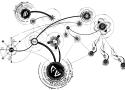
How the Isaac Caret Hoax was made.

The thing is, the documents do provide proof that a foreign government attempted to directly interfere in the election. However, it was not by China, but by the Russian government — on behalf of president Trump’s 2020 election bid.

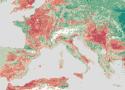
A CSIC team in Barcelona has developed CADI, a platform that forecasts, on a 10‑kilometre grid, how much farmland will lose productivity to climate change by 2100; Spain’s interior fares worse than the Cantabrian coast.
The law was supposed to force homeowners and landlords to put their rentals back on the market, increase supply, and allow rents to soften.* And while supply did re-enter the long term market, it still doesn’t capture if it eased rents. We can measure this by comparing rents in the Airbnb-heavy neighborhoods and see if they fell or grew more slowly after the ban compared to neighborhoods with almost no Airbnbs.
Six of the ten fastest-growing neighborhoods were high-Airbnb areas. The ten densest sat dead mid-pack, with 10.4% rent growth against a citywide median of 11.1%2. Midtown, the most exposed big neighborhood in Manhattan with 776 banned listings, saw asking rents rise 14.6%. The places that lost the most Airbnbs got rent increases at or above the same rate.
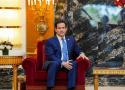
Some critics of the Trump administration are reacting with horror to revelations that US Secretary of State Marco Rubio has been serving as the de facto ruler of Venezuela.According to a Saturday report in The New York Times, Rubio for the last several months has been acting informally as the “vicer...
they are out $3 million, for a scheme that netted them more than $3 billion. That’s a thousand-fold return.
From 2022-2025, normal people could see what was going on, while elites denied it.
It appears the alleged election fraud in this case is coming from an actual MAGA supporter.
One recent study by financial-technology company Ramp and workforce-intelligence firm Revelio Labs found that companies making the largest AI investments grew employment by roughly 10% more than otherwise similar companies that hadn’t yet adopted AI.
“The companies that I know that have adopted AI the most are also the ones hiring the most,” Altman said in the CNBC interview. AI is even creating new demand for certain jobs, and more will come that don’t yet exist, some tech leaders say.

The savage sentences mark the first major prison terms in the Trump administration’s campaign to brand left-wing opposition to ICE, fascism and capitalism as terrorism.
The scale of the sentences is extraordinary. Comparable prison terms are typically imposed in cases involving murder, attempted murder of police officers, child sex trafficking or the repeated sexual abuse of children. The 50-year sentence for Ines Soto, a virtual life sentence, is especially appalling. She was not involved in planning the protest, she arrived separately, and left when guards ordered demonstrators to disperse. She had already left the scene before former Marine Benjamin Song allegedly shot and wounded an Alvarado police officer. For this, the government branded her a “terrorist” and secured what amounts to a virtual life sentence.

The approvals arrived after Kyle Kunkler, a former lobbyist for the American Soybean Association, was installed as deputy assistant administrator for pesticides. The soybean association had lobbied in favour of both new herbicides through the public docket. They mark the third and fourth PFAS pesticide clearances under the current administration, following cyclobutrifluram and isocycloseram.
Regulators abroad have already drawn harder lines. Denmark has banned diflufenican over its contribution to groundwater contamination, and epyrifenacil has never been cleared for use in Europe.

The findings suggest that important cognitive abilities, including language comprehension and prediction, may not depend on conscious awareness. Instead, consciousness itself may arise from communication across multiple brain regions rather than from activity within a single area such as the hippocampus.
The researchers also noted similarities between the brain's predictive behavior and artificial intelligence (AI). Just as large language models generate text by anticipating the next word, the hippocampus appeared to make similar predictions during language processing. Understanding these shared principles could help scientists better understand both biological and artificial intelligence.
In the first half of 2026, Republican-leaning donors gave $880 million, compared to $290 million from Democratic-leaning givers and $200 million from bipartisan and special interest groups.
college does less than assumed: 58% of students don't change at all, the average shift is only slightly left, major matters far more than institution (arts left, business/engineering right; selectivity and public/private barely register), and the public overestimates the leftward shift by about 2x.